Your Cart is Empty

Thinking about your first hive? Start with our free beginner's guide.

Thinking about your first hive? Start with our free beginner's guide.


New to beekeeping? Start with Flow®
✔ Built-in features to support colony health
✔ Everything you need in one bundle
✔ Trusted by beekeepers worldwide
 159,000+ hives sold
 Patented innovation
 B-corp certified
 Fast CA Shipping


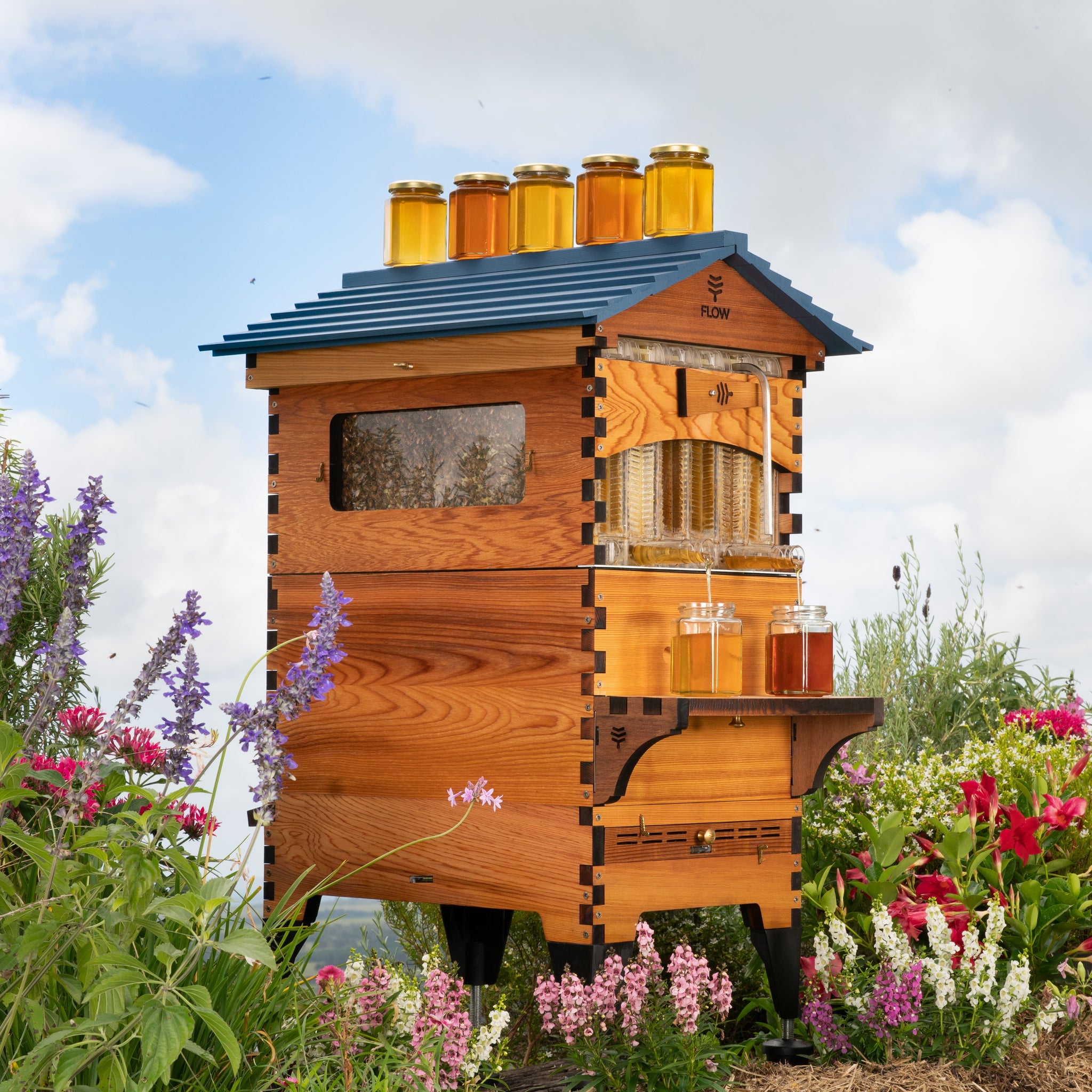
Invented by Australian father-and-son beekeepers, Cedar and Stuart Anderson, the Flow Hive reimagines honey harvesting - revolutionising a process unchanged for over 150 years.


Turn the Flow Key and watch honey flow straight into your jar, without opening the hive.
A simpler way to harvest, with minimal disturbance to your bees.
Turn a key and watch honey flow into your jar for a gentler, more considered way to harvest honey.


With your Flow Hive purchase, you’ll get a free 30-day trial of our online beekeeping course so you can feel confident caring for your bees.
Together you’ll learn:
 Where to put your hive
How to source bees
How to conduct your first inspection
Tips on finding your queen
And much more as you grow
Beginner friendly. Learn as you go.

I included photos, so tired of hearing it's too good to be true. It's simple…
Read more


We just harvested our first two frames and have been giving honey to all our…
Read more
Since mid October 2023 until late April 2024 I have been able to harvest 130…
Read more
Nearly 30 pints, and not a single bee disturbed! Here’s to more pollination in the…
Read more
We just loved our first one and have a Langstroth and Kenyan Top bar hive…
Read more
The hives came well packaged, with easy instructions and straightforward assembly. The design has instant…
Read more
From delivery to to assembly to support to the online beekeeping course, I’m very happy…
Read more
The hive, the stand, the bees, it’s all amazing. so glad that we made the…
Read more
For those of us with small apiaries (and extra $'s!), Flow Hives are absolutely the…
Read more
A slow start to a now booming hive. My friend is now in the process…
Read more
The whole flow frame idea is just awesome. Really enjoying the bee keeping experience. I…
Read more
We have had such fun painting/ decorating our hives. We split our hive late last…
Read more

If you do the research and use it as it should be used you will…
Read more
The whole family got involved with this evening's harvest from the hive. Around 9kg of…
Read more


We found the Flow Hive 2 that we purchased was very high quality, the extra…
Read more
Got over 110 oz of honey with our first harvest of just two frames. Located…
Read more


We took the bee keeper classes offered by Flow and assembled the hive over winter.…
Read more

We have a three-acre family homestead in Charlotte, NC, where we currently keep six hives.…
Read more

A very fresh newbie and taught from reading books and internet video's from the flow…
Read more
I love my Flow Hive and so does everyone who sees it! It makes beekeeping…
Read more
I just harvested our first honey from our Flow Hive with the help of my…
Read more

Get a clear, beginner-friendly look at what it takes to keep bees with our free, downloadable guide.
Inside you’ll learn:
Clear, practical guidance you can read in minutes.
Ready to take the first step? Learn beekeeping terminology – from queen excluders, to drone bees and all the parts of a beehive – by downloading our simple PDF guide to beekeeping to start your journey today.


